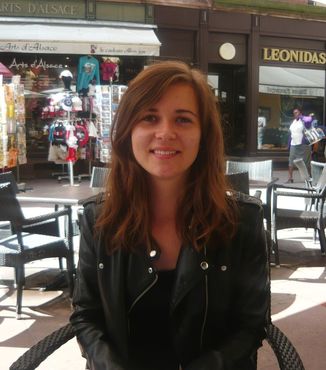
I began studying the 3.5-year Value Chain Management programme at VIA University College in Horsens in August 2015.
From the beginning, I felt comfortable here. Horsens is a relatively small town, so most places are easy to reach. Like many other students, I cycle to university, and the journey takes me only around ten minutes.
VIA feels genuinely student-friendly. Whenever a problem arises, there is always someone you can contact for advice or support. My lecturers are approachable and make a real effort to explain the subjects clearly during classes.
You do not feel left alone when something is difficult or unclear.
The university is highly international, with students from many different countries. Being surrounded by people from across the world made me realise that moving abroad is much more achievable than it may initially seem.
Before leaving, studying in another country can feel like something only especially confident or adventurous people can manage. Once you arrive, you discover that most international students have similar worries and are simply learning step by step.
The studies themselves are very different from the educational approach I had previously known.
Value Chain Management is strongly based on teamwork. In my programme, almost every task is completed in groups rather than individually.
At first, this requires adjustment. You need to communicate clearly, divide responsibilities, manage different working styles, and find solutions together.
However, this is also one of the greatest strengths of the programme. In professional life, you will rarely work completely alone, especially in fields connected to logistics, production, supply chains, and business management.
Group projects help you develop the practical skills required to cooperate with people from different cultures and professional backgrounds.
Living in Denmark does require serious financial preparation. Accommodation and everyday expenses can be much higher than students expect before arriving.
Student residences may offer both shared and private rooms, while finding suitable private accommodation can be more difficult. Prices and housing conditions change over time, so future students should research current options and begin searching as early as possible.
Finding part-time work can also be challenging because many international students are applying for the same positions. Some students choose to travel to nearby towns for work when they cannot find suitable opportunities in Horsens.
For this reason, it is important to arrive with savings and not depend on finding a job immediately.
Despite the financial challenges, I am happy that I chose to study in Denmark. The international community, supportive lecturers, short distances, and practical group-based education have made the experience worthwhile.
Kastu also made the application much easier. Their team helped me manage the formal requirements, so I did not have to worry about every document and procedure on my own.
If the application process feels overwhelming or you simply want one less problem to manage, having that guidance can make a major difference.
Studying abroad is not effortless. You need to adapt to higher living costs, search for accommodation, communicate in another language, and learn how to work with many different personalities.
But these challenges also help you become more independent and prepared for professional life.
Once you arrive and become part of the international student community, you realise that studying abroad is not impossible. It is simply a new experience that you learn to manage one step at a time.